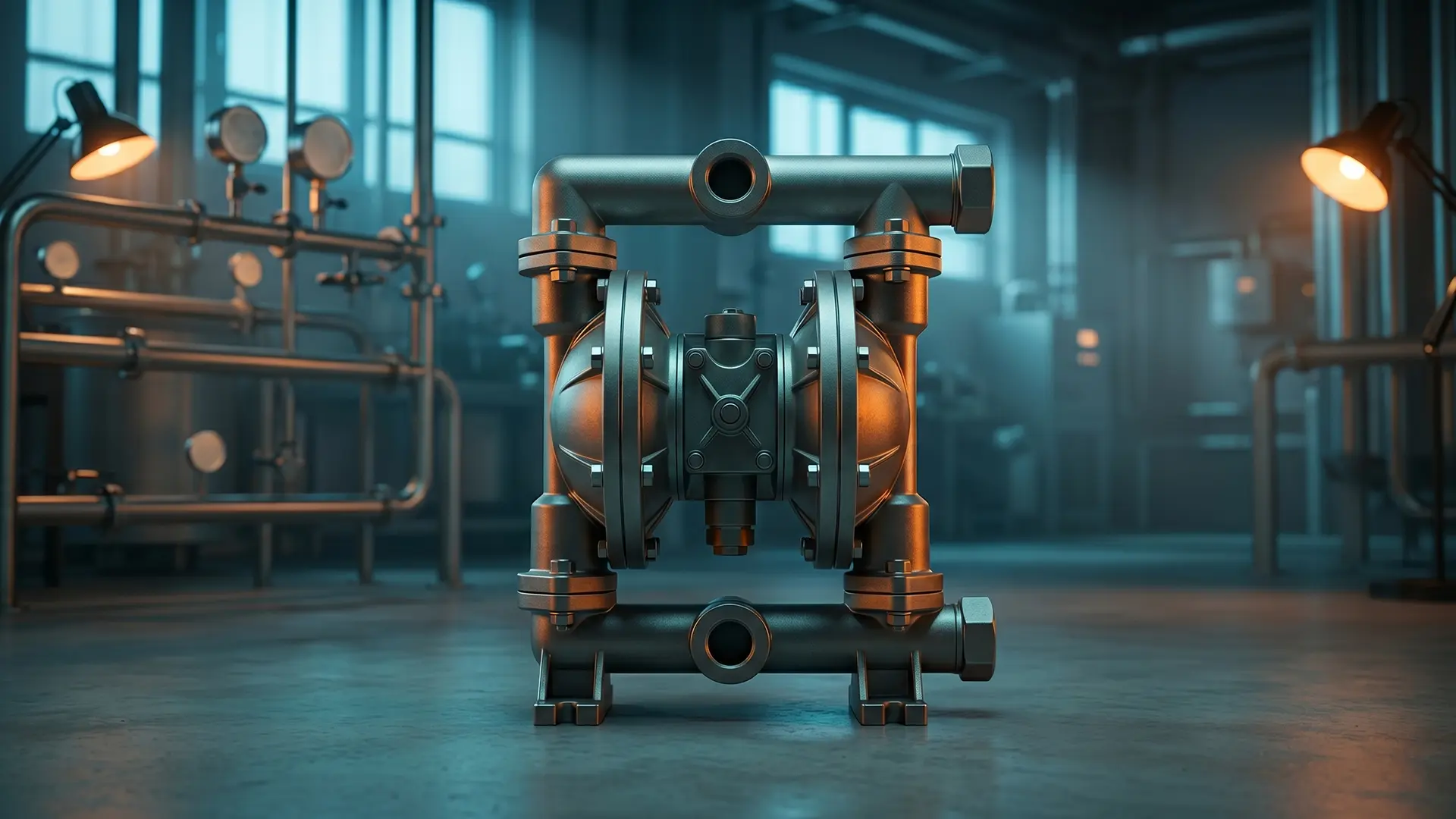
100% Safety Without Electricity
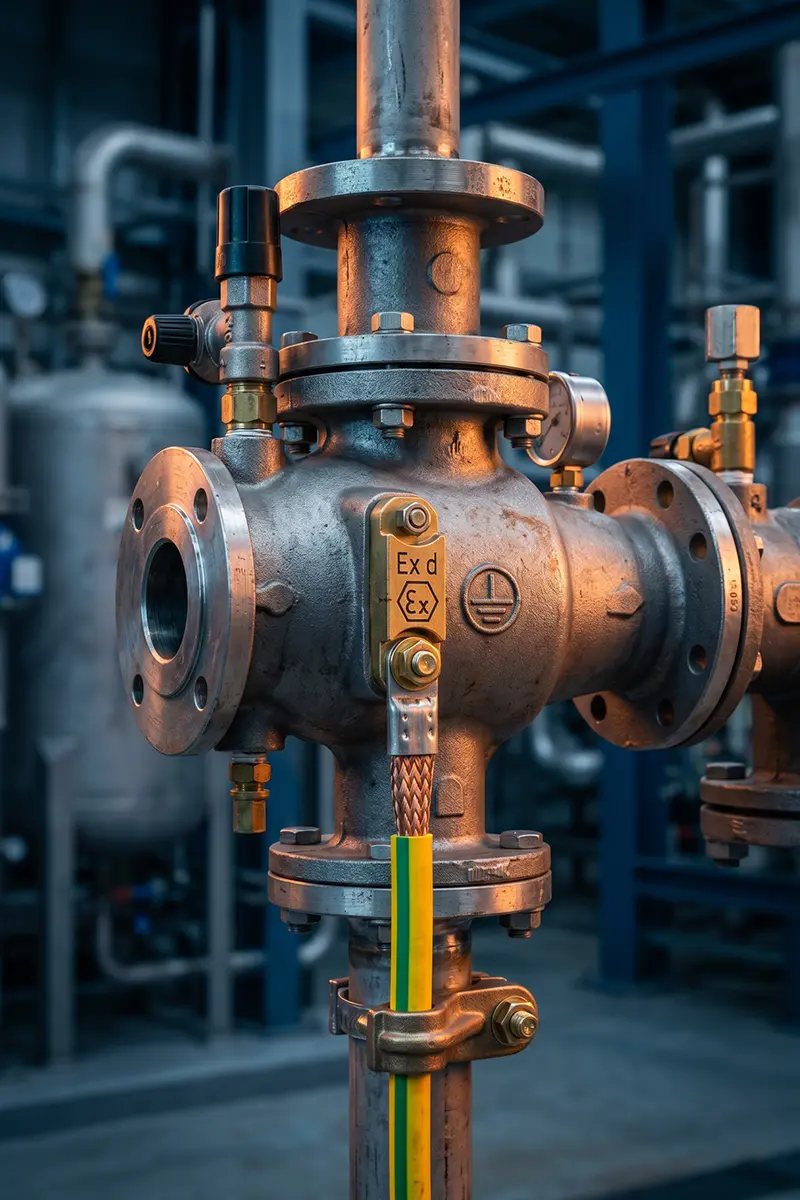
In environments with solvent, alcohol or flammable gas emissions, even a tiny spark from an electric motor pump can cause disaster. Pneumatic Diaphragm pumps draw their energy from compressed air from the factory compressor. Since there is no electrical connection, they provide 100% Ex-Proof (ATEX) protection. Since they have no mechanical impeller, they can also easily pump liquids containing fruit particles or solid particles without crushing the product.
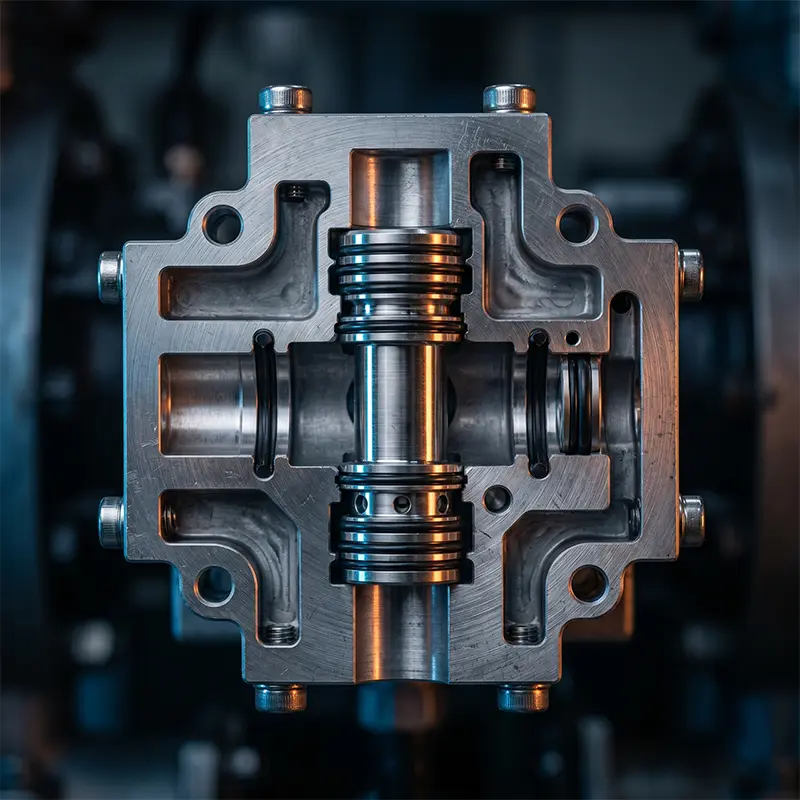
Critical Engineering Features
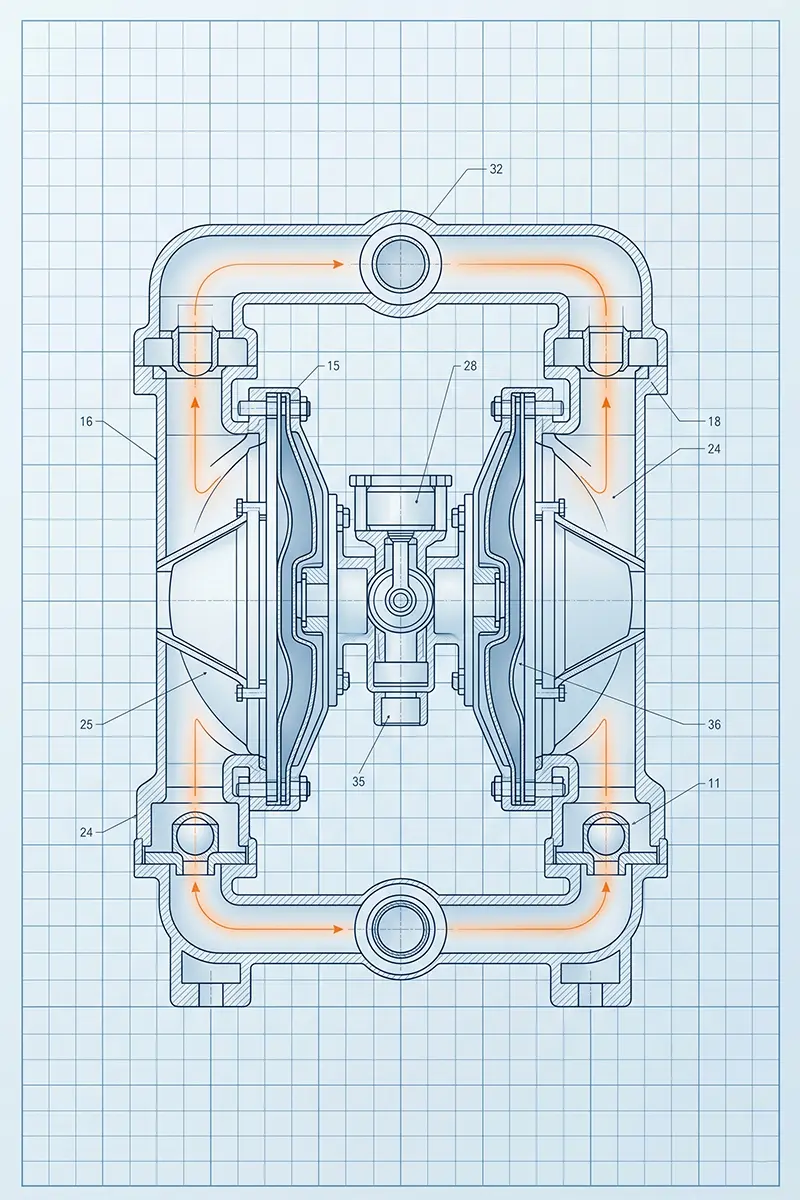
Diaphragm Pump Capacity Table
* The performance of pneumatic pumps is directly dependent on the air pressure (Bar) produced by the compressor in your facility. Data is calculated with reference to 7 Bar air supply.
| Connection Size | Max. Flow (L/min) | Max. Air Pressure | Solid Particle Size |
|---|---|---|---|
| 1/2" Inch | 50 L/min | 7 Bar | 3 mm |
| 1" Inch | 160 L/min | 7 Bar | 4 mm |
| 1.5" Inch | 350 L/min | 7 Bar | 6 mm |
| 2" Inch | 600 L/min | 7 Bar | 8 mm |
Pneumatic Transfer FAQ
Does dry running damage the pump?
No. Unlike centrifugal and lobe pumps, air diaphragm pumps do not heat up and break down even if they run dry (without liquid) for hours since there is no mechanical friction.
How can I adjust the flow rate?
While expensive inverters (frequency drives) are needed for electric motor pumps, simply throttling or opening the air valve from the compressor is sufficient to change the flow rate in diaphragm pumps.
How do we select the diaphragm material?
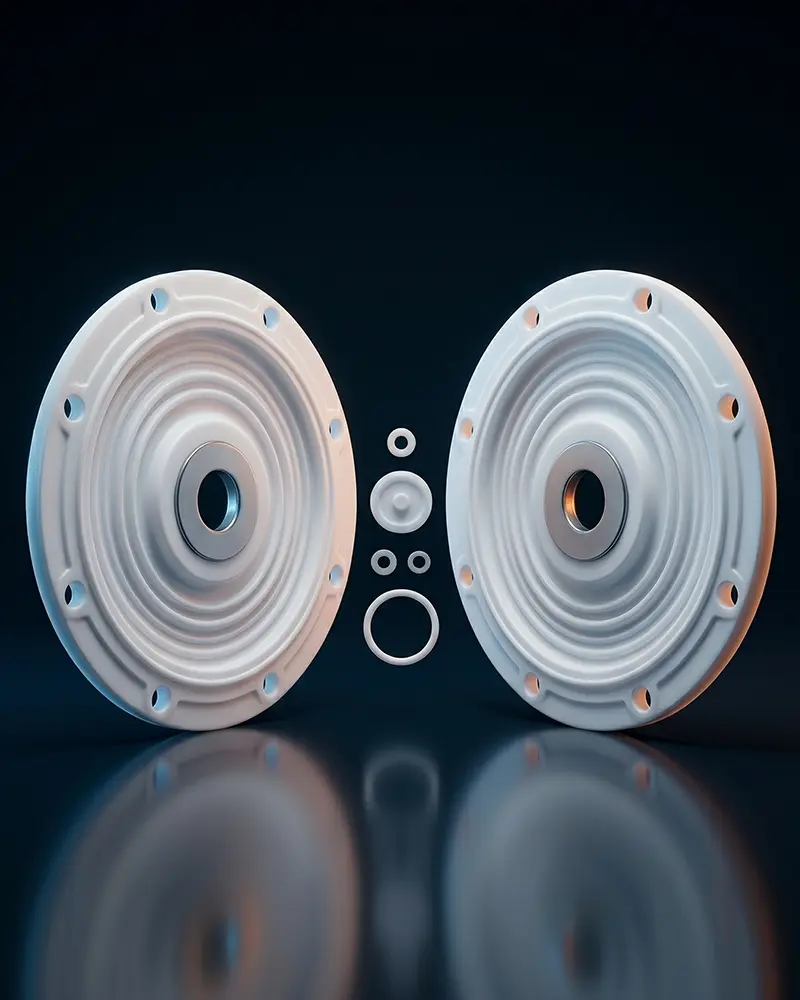
PTFE (Teflon) with excellent chemical resistance for aggressive acids and solvents; Santoprene or NBR with flexible structure for food applications or sludgy products containing abrasive particles.
Example Applications
Technical Document
DOK-13 PDF Specification
ATEX certification documents, diaphragm chemical resistance table and pressure/air consumption curves.
Download Document (PDF)
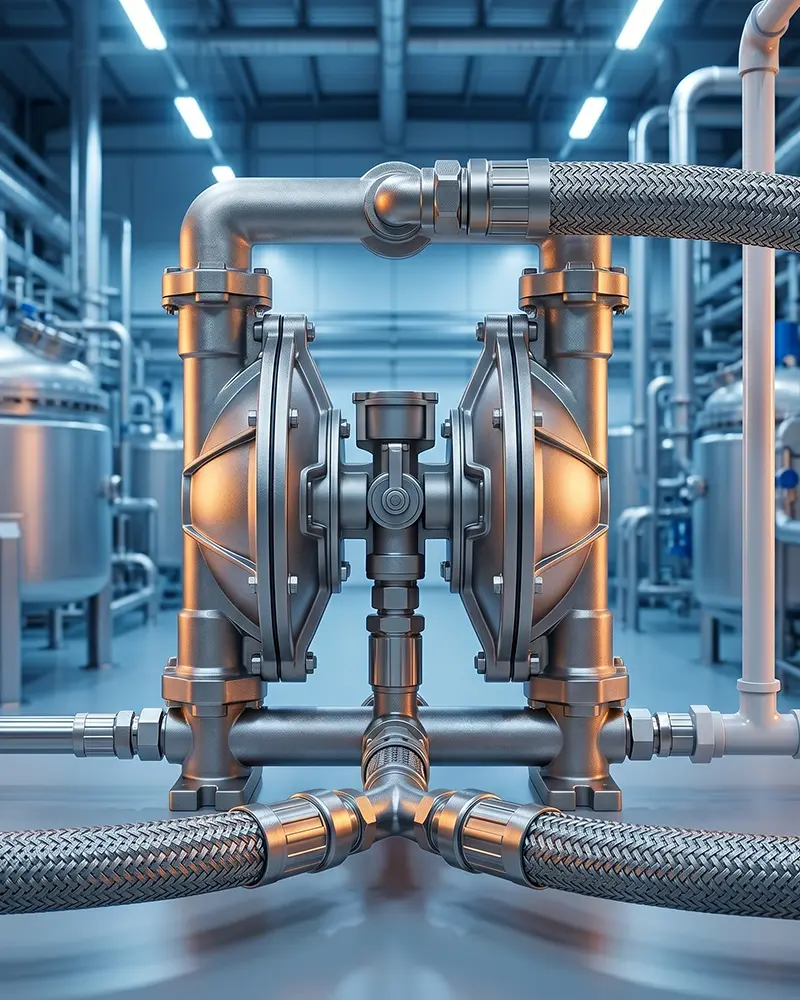
ATEX transfer station with PTFE diaphragm from reactors to 50-ton storage tanks in a high-flammability chemical production facility.
View All ReferencesPneumatic Engineering
Specify your facility compressor capacity and the liquid to be transferred, and we will calculate the correct diaphragm material and size.
Request a Quote →